
How to improve your child’s concentration while studying: 10 practical tips
Simple habits and a calmer study space that help children stay focused for longer.
EduSolve Academic Team4 min read
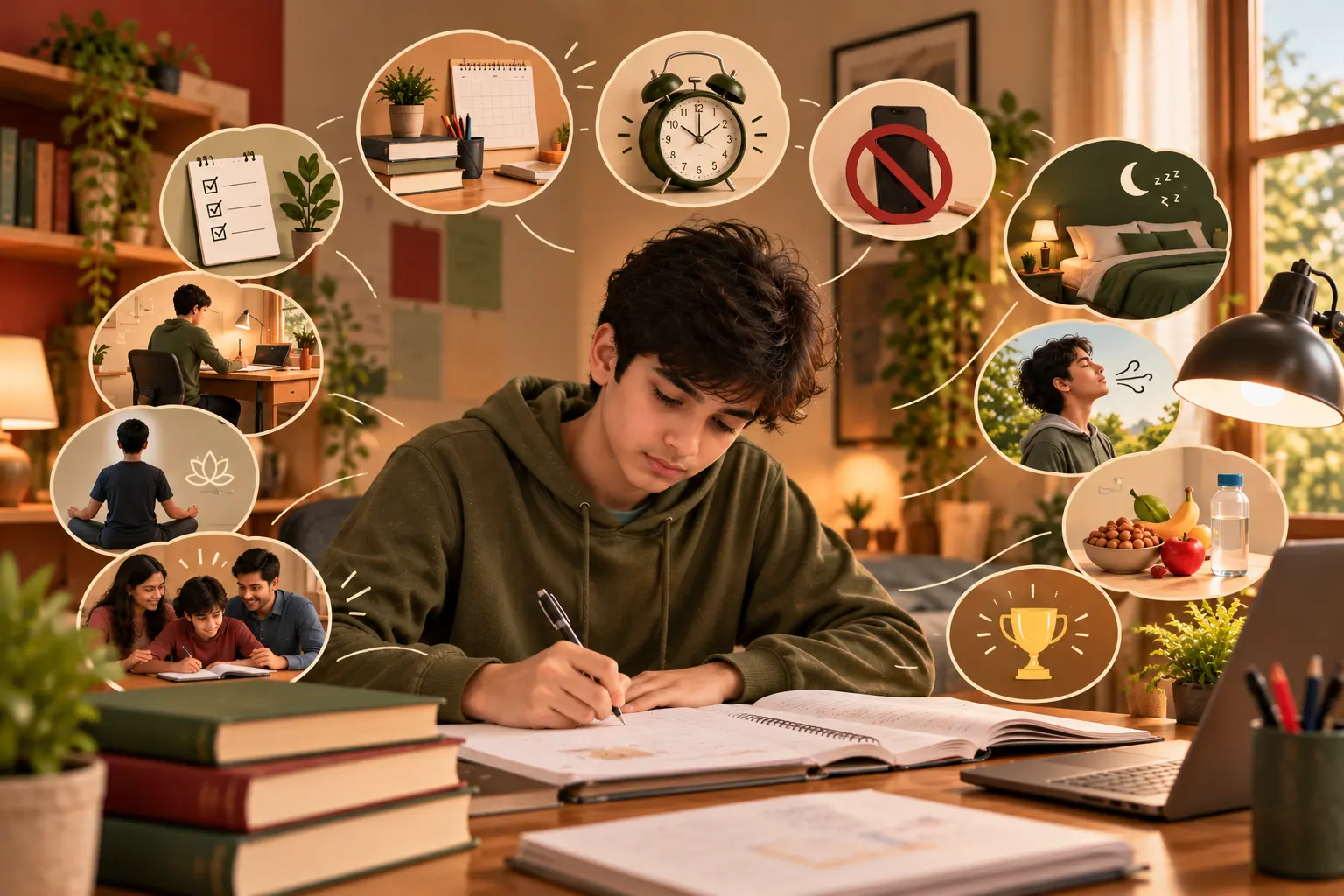
Many parents find that their children get distracted while studying. They may check their phones, watch TV, play games, or simply lose interest after a short time. Sometimes, the problem is not just distraction. A child may be tired, worried, bored, or struggling to understand a particular subject. With the right habits and a comfortable learning environment, children can gradually improve their concentration.
1. Create a quiet study space
A quiet and clean study space can help your child focus better. Choose a place away from the TV, loud conversations, and other distractions. Keep the study table organized and make sure your child has everything needed before starting. A regular study space can also help children get into the habit of studying at a particular time.
2. Keep the phone away
Mobile phones can easily distract children while studying. Messages, notifications, social media, and games can quickly take their attention away from their books. If the phone is not needed for studying, keep it away during study time. This simple change can help your child stay focused for longer.
3. Set small study goals
Studying a full chapter at once can feel difficult for a child. Instead, divide the work into smaller tasks. For example, ask your child to complete 10 maths problems or study one small topic in science. Small goals are easier to complete and can make studying feel less stressful.
4. Give short breaks
Children may find it difficult to concentrate for a long time without a break. Encourage your child to take short breaks between study sessions. They can drink water, walk around, stretch, or simply rest for a few minutes. After the break, they can return to their studies with a fresh mind.
5. Make studying more interesting
Reading the same textbook again and again can become boring. Try different ways of learning. Your child can make short notes, draw diagrams, use flashcards, solve questions, or explain the lesson to someone else. When children actively participate in learning, they may find it easier to stay interested.
6. Find out what your child is struggling with
Sometimes a child loses concentration because they don't understand the topic. If your child keeps avoiding a particular subject, ask them what they find difficult. They may need a simpler explanation or more practice. Finding and solving the learning gap can make the subject easier and help the child feel more confident.
7. Encourage physical activity
Children need time to move and play. Sitting and studying for many hours without physical activity can make them tired. Encourage your child to play outside, walk, cycle, or take part in sports. A balanced routine with study and physical activity can help children feel more refreshed.
8. Make sure your child gets enough sleep
Sleep is important for learning and concentration. A tired child may find it difficult to pay attention or remember what they studied. Try to maintain a regular sleeping routine and avoid too much screen time before bedtime. Good sleep can help your child feel more active and focused during the day.
9. Don't compare your child with others
Every child learns at a different pace. Comparing your child with classmates, friends, or siblings can create unnecessary pressure. Instead, focus on your child's own improvement. Encourage them when they make progress and help them work on areas where they need support.
10. Follow a regular study routine
A regular study routine can help children become more disciplined. Try to set a suitable time for studying every day. The routine can include study time, short breaks, homework, revision, play, and rest. When studying becomes a regular part of the day, children may find it easier to concentrate.
Give your child the right support
If your child continues to struggle with concentration, try to understand the reason behind it. They may need help with a difficult subject, a different way of learning, or more individual attention. Personalized learning can help a student understand difficult topics at their own pace and ask questions comfortably.
EduSolve provides live online tuition for students from LKG to Grade 12, covering CBSE, ICSE, IGCSE, IB, and American curricula. Students can learn from home with support from experienced tutors.
Final thoughts
Improving concentration takes time. Parents can help by creating a quiet study environment, reducing distractions, encouraging healthy habits, and supporting their child's learning needs. Small changes in a child's daily routine can make studying easier and more enjoyable.
The goal is not to make your child study for more hours. The goal is to help them study with better focus and understanding.
Want one-on-one help?
Try a free class with a tutor who knows your child’s board.